
· Focus11 News Desk · IPL 2026
Cricket Australia has decided to open the 2026-27 Big Bash League season in Chennai. In the same reporting cycle, administrators are discussing whether the 150th-anniversary Ashes Test could be staged in India, with Ahmedabad, Chennai or Mumbai named among the possible venues. Former England spinner Monty Panesar told India Today the moves look like commercial experiments that could still harden into a longer realignment of cricket's global calendar. For Focus11 readers following IPL 2026 news, schedules and match analysis, the thread is less about nostalgia and more about where broadcast money, player availability and franchise windows now sit.
What Cricket Australia has actually confirmed
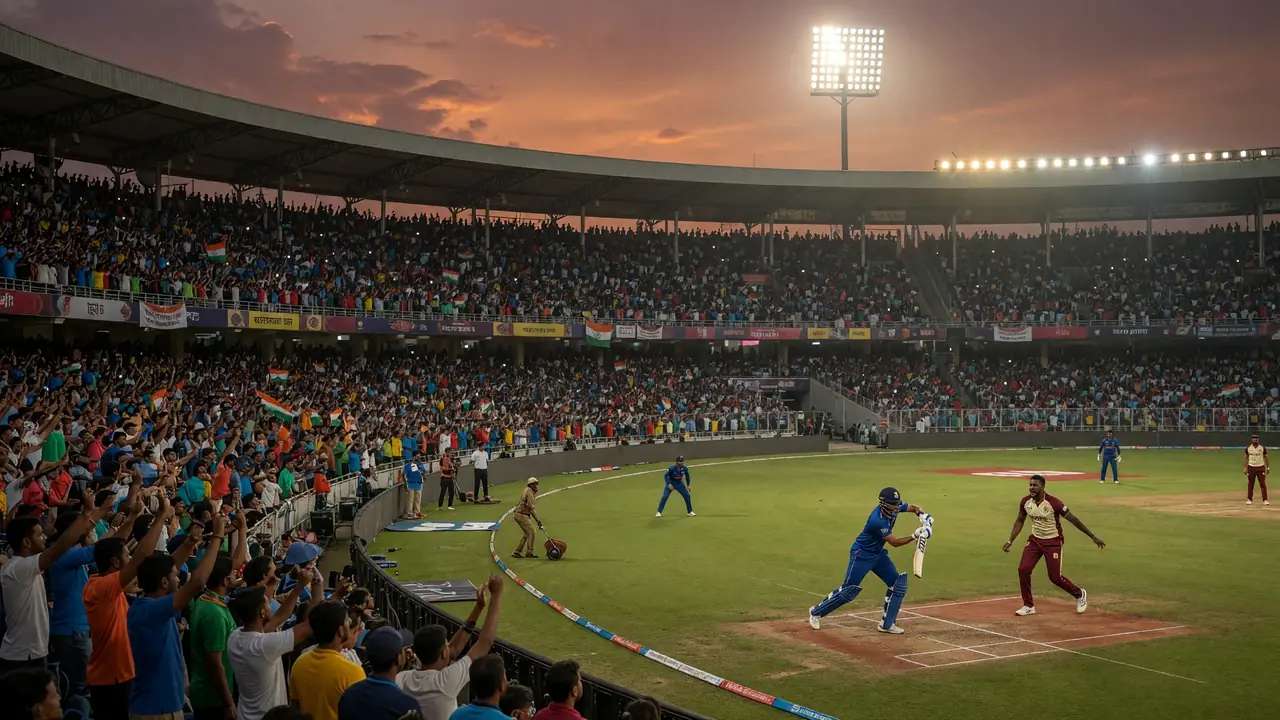
The firm decision on the table is the Big Bash opener. Cricket Australia will stage the first match of the 2026-27 BBL season in Chennai. That is not a bilateral series stopover dressed up as a league fixture. It is a franchise tournament taking its curtain-raiser outside Australia and into a market that already anchors the IPL window every year.
The Ashes conversation is softer and should be read that way. Administrators are discussing a 150th-anniversary Ashes Test in India. The venues most often mentioned are Ahmedabad, Chennai and Mumbai. No board has published a locked itinerary in the India Today report, and no start date is attached to the Test idea beyond the anniversary framing. The distinction matters. One item is a calendar decision. The other is an active commercial conversation.
Panesar's reading, as carried by India Today, treats both items as temporary commercial experiments that could still begin a longer realignment. He is not describing a finished transfer of the Ashes. He is describing a willingness among administrators to test where the largest paying audience and the largest media market now sit.
Why Chennai is a logical first stop for the Big Bash
Chennai already hosts one of the IPL's most recognisable home environments, and it sits inside India's densest cricket media corridor. Opening a foreign franchise league there is less a novelty night and more a recognition that the Indian consumer base can underwrite a season launch the way a domestic Australian city once did on its own.
The India Today report places the BBL decision inside a wider commercial map. Cricket has more than two billion followers worldwide, and India accounts for more than a billion of them. That imbalance is not new, but it is now shaping fixture placement rather than only rights auctions. A league that wants opening-night attention is increasingly willing to travel to where the audience already gathers through the Indian season.
For IPL 2026 watchers, the practical signal is calendar pressure. International windows and overseas franchise starts are being drawn around Indian demand rather than treated as separate silos. When the BBL opens in Chennai, it is competing for attention, broadcast inventory and, eventually, player release conversations that already orbit the IPL season.
The Ashes conversation and what is still unconfirmed
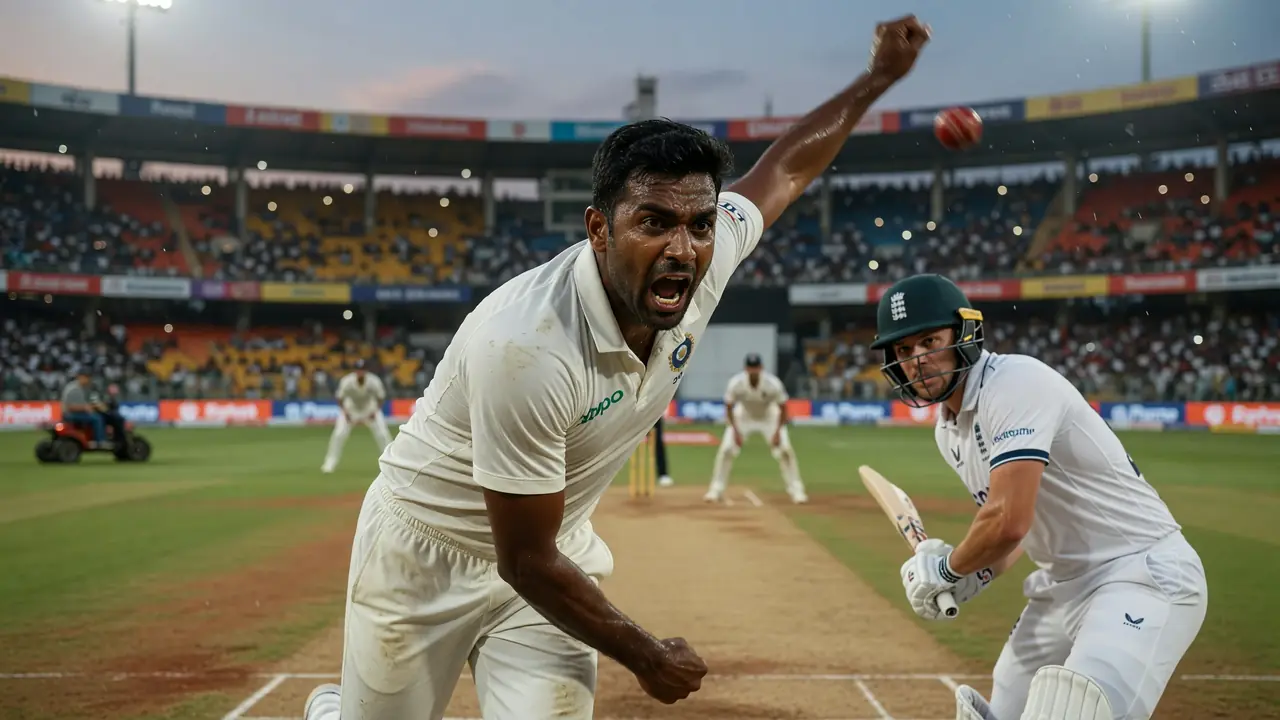
A 150th-anniversary Ashes Test in India would be a larger break with tradition than a BBL opener. The Ashes is still the bilateral brand most closely tied to England and Australia. Moving even one anniversary Test to Ahmedabad, Chennai or Mumbai would place that brand inside the same stadium economy that already hosts IPL finals and ICC events.
Panesar told India Today that an Ashes Test in India could become one of the most commercially valuable Test matches ever played, citing India's consumer base and economic leverage. That claim sits in the realm of commercial projection rather than a signed fixture list. The report does not publish ticket inventory, rights splits or a confirmed host board package. It does establish that the conversation is live among administrators and that the venue shortlist is Indian, not a neutral third country.
Readers should hold two thoughts at once. First, the anniversary framing gives boards a one-off justification that is easier to sell than a permanent home shift. Second, once an anniversary Test is staged successfully, the commercial case for repeat visits becomes harder to dismiss. Panesar's longer view is that India's influence is likely to strengthen over the next 10 to 20 years. The anniversary Test idea is one early stress test of that claim.
IPL economics still set the global reference rate
The commercial centre of the game is no longer an abstract talking point. The IPL media-rights cycle for 2023-27 fetched nearly Rs 48,390 crore, described in the report as one of the richest broadcasting deals in world sport on a per-match basis. That figure is the reference rate against which other boards and leagues now price their own packages.
The 2023 ODI World Cup hosted in India became the most digitally watched ICC tournament in history, according to the same report. Digital scale and stadium scale are reinforcing each other. Boards that want global reach are no longer choosing between an Indian audience and a traditional audience. They are trying to attach themselves to the Indian audience without surrendering their own domestic identities.
Panesar also pointed to BCCI's share of ICC revenue distribution, put at around 38.5 percent in the report. Revenue share is influence by another name. It shapes full-member voting weight, event hosting patterns and the willingness of other boards to schedule around Indian windows. When that share sits near two-fifths of the distribution pool, commercial experiments such as a BBL opener in Chennai stop looking eccentric and start looking rational.
How franchise cricket copied the IPL blueprint
The report describes the IPL as the blueprint for later franchise leagues, including SA20, The Hundred, Major League Cricket and the ILT20. Some overseas franchises are owned by IPL investors. Ownership is the quiet half of the power shift. When the same investor group holds stakes across multiple leagues, player pathways, coaching staff and commercial templates travel with the capital.
That is why an Australian league opener in Chennai is not only a tourism story. It is a franchise-system story. The IPL taught boards that city identity, short-format intensity and broadcast packaging can out-earn longer bilateral tours on a per-match basis. Every league that followed borrowed some mix of the draft or auction logic, the salary cap, the city branding and the compressed season.
International calendars are increasingly designed around the IPL window, and global tournaments are scheduled with Indian broadcasters in mind. Focus11 managers already feel that reality every March and April, when player availability notes, workload management and delayed arrivals dominate team news. The BBL decision simply makes the same gravity visible outside the IPL's own peak weeks.
What Focus11 readers should watch through the IPL 2026 cycle
The immediate fantasy and editorial questions are practical. If overseas leagues keep attaching marquee nights to Indian cities, player release clauses and workload limits will get noisier, not quieter. A BBL opener in Chennai sits closer to the IPL recovery window than a purely Australian launch would. That can affect when overseas-signed players report, how franchises stagger rest, and which multi-league stars arrive underdone or overplayed.
Second, broadcast clutter rises. Indian viewers already move from IPL nights to international white-ball legs to other franchise products. Another high-profile opener on Indian soil intensifies the fight for prime evening inventory. For a Focus11 reader, that fight shows up as denser team-news cycles and shorter gaps between contest windows.
Third, Test cricket's commercial experiments will leak into white-ball planning. If an anniversary Ashes Test is seriously scoped for Ahmedabad, Chennai or Mumbai, the surrounding bilateral calendar will have to flex. Even a single relocated Test changes preparation blocks for England and Australia and can shift when their franchise-contracted players are free for Indian leagues in adjacent windows.
Panesar's warning about saturation and smaller boards
The report is not only a victory lap for Indian market power. Panesar warned that if Indian viewing habits change, or if the market becomes saturated with franchise cricket, leagues worldwide could feel the shock. That is the reverse edge of the same concentration risk. When too much of the game's commercial oxygen sits in one market, a cooling of that market is not a local problem.
He also argued that the ICC should revise revenue distribution so smaller boards such as West Indies, Pakistan and Sri Lanka can better retain players for international cricket. The player-drain story is familiar to Focus11 readers who track Caribbean and Pakistan talent across franchise drafts. Without a sturdier central distribution model, bilateral cricket in those countries keeps losing weeks to leagues that can pay more for fewer nights.
Panesar suggested an ODI Super League similar to the World Test Championship so smaller nations regularly face bigger teams. The idea is structural rather than sentimental. Regular high-quality ODIs would give smaller boards broadcast inventory and give players a reason to keep the 50-over format in their annual plan instead of treating it as residual work between T20 leagues.
Where the next decade of influence is pointed
Panesar expects India's influence to strengthen over the next 10 to 20 years. He said the IPL could expand its calendar because of commercial success, while also citing growth opportunities around cricket at the Los Angeles 2028 Olympics and in the UAE, Saudi Arabia and Europe. Those are parallel tracks, not contradictions. India supplies the deepest paying audience and the strongest franchise template. Newer markets supply expansion runway and Olympic novelty.
For the IPL 2026 season specifically, the near-term read is continuity with rising external confirmation. The league does not need a BBL opener in Chennai to prove its status. The BBL needs Chennai more than Chennai needs the BBL. That asymmetry is the cleanest one-line summary of the power shift described on 2 August 2026.
The Ashes conversation should stay in the provisional column until boards publish dates, venues and commercial terms. The BBL opener should sit in the confirmed column. Readers who mix those two confidence levels will misread the story. One is a fixture decision. The other is a live negotiation dressed in anniversary language.
Commercial numbers that still frame every calendar argument
Three figures from the report will keep recurring in board meetings long after the Chennai opener is played. Nearly Rs 48,390 crore for the 2023-27 IPL media-rights cycle sets the per-match benchmark. More than a billion of cricket's two-billion-plus global followers sit in India, which sets the audience benchmark. Around 38.5 percent of ICC revenue distribution flowing to the BCCI sets the governance benchmark.
Those three numbers explain why administrators can seriously discuss an Ashes Test in Ahmedabad, Chennai or Mumbai without the idea being dismissed out of hand. They also explain why a league as Australian as the Big Bash will open in Chennai. The centre of gravity is not migrating because traditional venues failed. It is migrating because the commercial returns now concentrate east of the old axis.
Focus11's IPL 2026 coverage will keep treating Indian franchise nights as the default peak of the global calendar. Everything else, from overseas openers on Indian soil to anniversary Test proposals, is orbiting that peak. The 2 August report simply made the orbit visible with two concrete examples instead of another round of vague commentary.
What remains open after the India Today report
Several questions are still unanswered in public. The report does not fix the exact Chennai venue package for the BBL opener, the broadcast split for that night, or the player-release implications for dual-contract stars. It does not confirm which board would underwrite an Ashes Test in India, how England and Australia would share commercial upside, or whether the anniversary match would replace a home Test or sit as an additional fixture.
Until those details land, the responsible editorial line is narrow. Cricket Australia will open BBL 2026-27 in Chennai. Administrators are discussing a 150th-anniversary Ashes Test in India, with Ahmedabad, Chennai and Mumbai in the venue conversation. Monty Panesar frames both as commercial experiments with longer structural consequences, points to IPL rights value and BCCI revenue share as the economic backbone, and warns that concentration risk and weaker revenue distribution still threaten smaller boards.
That is enough to understand the direction of travel for IPL 2026 readers. The next concrete checkpoint is the published BBL 2026-27 fixture list that locks the Chennai opener into a date and broadcast window. The Ashes idea will need a joint board statement before it moves from conversation to calendar.
Build your next Focus11 contest entry
Use the IPL 2026 team notes and match timing windows when multi-league travel starts reshaping availability lists.
Frequently asked questions
Where will the 2026-27 Big Bash League season open?
Cricket Australia has decided to stage the opening match of the 2026-27 Big Bash League season in Chennai, according to the India Today report published on 2 August 2026.
Is an Ashes Test in India confirmed?
No. The report says administrators are discussing a 150th-anniversary Ashes Test in India, with Ahmedabad, Chennai or Mumbai cited as possible venues. It is an active conversation, not a locked itinerary.
What commercial figures sit behind the power-shift argument?
The report cites the IPL 2023-27 media-rights cycle at nearly Rs 48,390 crore, more than a billion of cricket's two-billion-plus global followers in India, and around 38.5 percent of ICC revenue distribution going to the BCCI.
Which leagues does the report say followed the IPL model?
The IPL is described as the blueprint for later franchise leagues including SA20, The Hundred, Major League Cricket and the ILT20, with some overseas franchises owned by IPL investors.
What warning did Monty Panesar raise?
Panesar warned that if Indian viewing habits change or the market becomes saturated with franchise cricket, leagues worldwide could be affected. He also argued for revised ICC revenue distribution to help smaller boards retain players.
What should IPL 2026 readers watch next?
The next concrete checkpoint is the published BBL 2026-27 fixture list that locks the Chennai opener to a date and broadcast window. The Ashes proposal still needs a joint board statement before it belongs on a confirmed calendar.
Source: Ashes in India? How cricket's centre of gravity is shifting east - India Today, 2 August 2026. Reporting by Sabyasachi Chowdhury.