
· Focus11 News Desk · Retrospective read
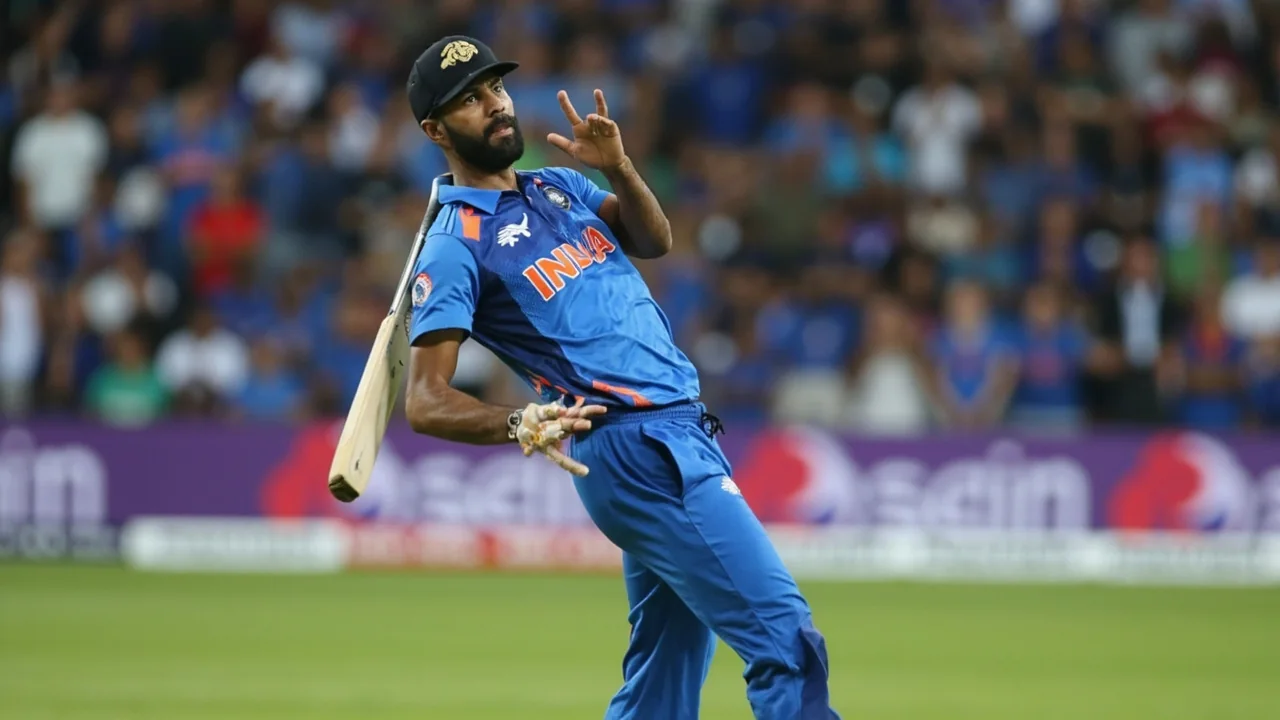
A 7:00 PM IST start at the Rose Bowl on Saturday, 11 July 2026, closed England versus India in the 2026 tour with England already holding an unassailable 3-0 lead and a shot at the No. 1 spot in the ICC T20I rankings. The pre-match prediction published that afternoon worked through the captain picks, vice-captain options, predicted playing XIs and a venue-specific note that teams batting first had won 16 of 24 T20Is at the ground. Below is the Focus11 desk's retrospective on the read, with the verified numbers preserved and the fantasy framing adjusted for a Focus11 board.
The verified situation at Southampton on 11 July 2026
The 5th T20I sat at the end of a series that opened with a washout. After the first match was lost to rain, England won the next three to clinch their first bilateral T20I series against India and reach a 3-0 lead heading into the Rose Bowl fixture. The pre-match prediction published on 11 July 2026 at 14:55 IST framed the final match around three concrete anchors: a confirmed 7:00 PM IST start, a confirmed venue, and a confirmed ranking implication for the touring side.
On that ranking point, the source was direct. England had already won their first bilateral T20I series against India, and a victory in the 5th T20I could take them to the No. 1 spot in the ICC T20I rankings. India's incentive, by contrast, was a face-saving finish and a chance to keep the tour alive for the rest of the senior tour calendar. The combination framed every Fantasy XI decision below: England's batters were in form, India's bowling attack needed wickets, and the venue's batting record pointed towards a first-innings total.
How the series reached 3-0 before the final match
Three matches is a small sample, but the pattern was clean. England won each completed fixture, and the pattern of the wins (powerplay scoring, middle-overs control, and tidy death bowling) left India chasing conditions more than targets. That is the kind of series shape that distorts a captaincy choice on Fantasy XI boards: the side that has been winning tends to keep its core intact, and the side that has been losing tends to rotate.
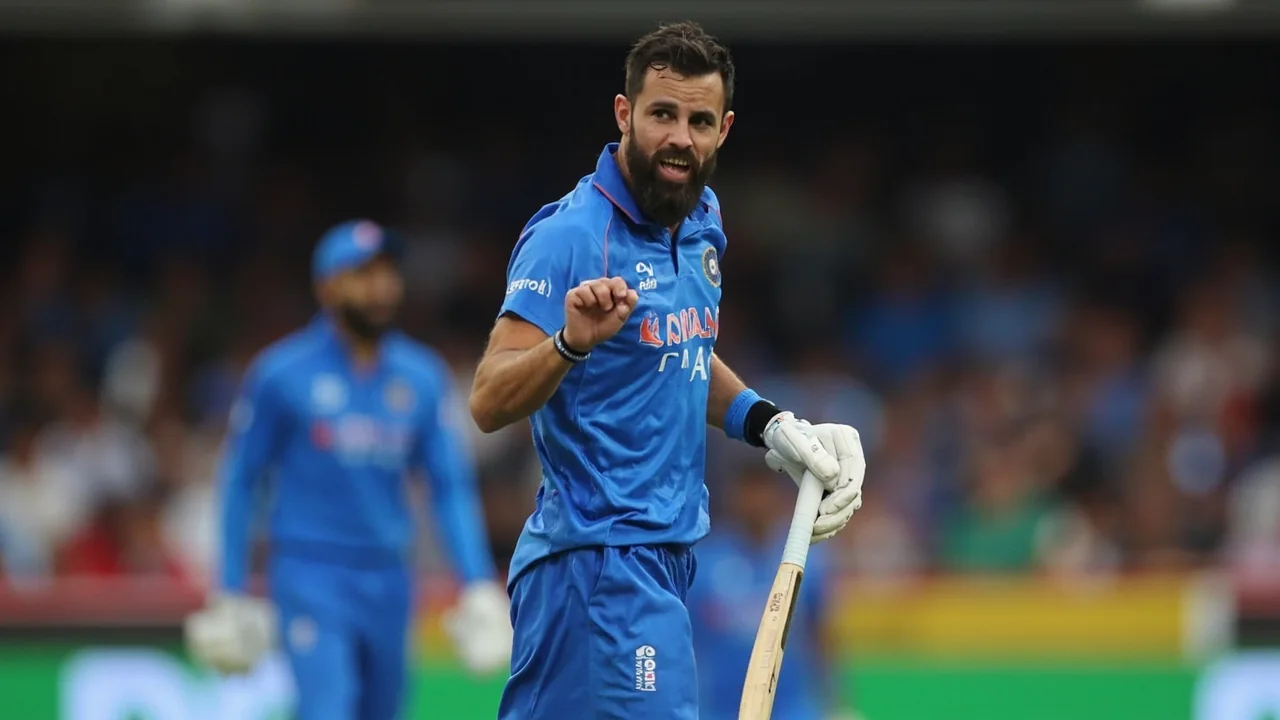
Two consequences follow from that shape. First, the predicted England XI carried continuity from the previous three games, with Jos Buttler behind the stumps and Harry Brook leading the batting order. Second, the predicted India XI reflected the kind of late-series reset that often brings a young batter or a returning all-rounder into the top seven. The captaincy frame on the source was built around those two dynamics, not around the dead-rubber math alone.
Reading the Rose Bowl table before locking a Fantasy XI
The Rose Bowl venue table was the most cited data point in the pre-match prediction, and it was reproduced in three short lines. Across 24 T20Is, teams batting first had won 16 and teams batting second had won 8. The average first-innings score sat at 166. Read together, those three numbers describe a venue that rewards the side willing to post, and one that punishes the side that tries to chase under lights.
For a Fantasy XI manager, the venue table compresses into three actionable rules. First, prioritise powerplay hitters in the captain and vice-captain slots, because the venue rewards first-innings totals rather than second-innings chases. Second, treat the seam-bowling all-rounder as a differentiator at the Rose Bowl, because the boundary dimensions reward cutters and slower balls that hold their line. Third, do not overweight the wicketkeeper-batter at the expense of a frontline bowler, because the venue's average first-innings score sits 30 runs below what most fantasy templates assume for an English ground.
Captain and vice-captain logic from the pre-match prediction
The captain and vice-captain slots in the pre-match prediction were split between two distinct profiles: a frontline batter who had been England's leading run-scorer across the three completed matches, and a frontline quick who had been India's leading wicket-taker. That is the kind of pairing that gets Fantasy XI managers through a dead rubber without overcommitting to either side. The source named Harry Brook as the preferred captaincy choice, with Jofra Archer the natural vice-captain pick if you wanted bowling points rather than batting points.
On the Indian side, the prediction carried Abhishek Sharma and Ishan Kishan as the captain or vice-captain options if you wanted to back the tourists. Both profiles fit the venue table: Sharma offers left-handed powerplay intent against the new ball, and Kishan offers wicketkeeper-batter points that compound with boundary bonuses. The captaincy call came down to which side you trusted to read the pitch first.
The two predicted XIs as the source saw them
Two predicted XIs sat in the pre-match prediction, and both are worth preserving because they show how the source framed the late-series reset. India's XI was published with Shreyas Iyer as captain, signalling a senior middle-order reshuffle that pushed the returning players up the order. England's XI was published with Harry Brook as captain and Jos Buttler as the wicketkeeper, with the batting order built around powerplay scoring and a left-right combination in the top three.
Reading the two XIs together gives a Fantasy XI manager three concrete signals. First, Buttler's slot behind the stumps is locked, so the wicketkeeper-batter differential on the Focus11 board should not be a debate for England picks. Second, India's bowling attack carries a left-arm angle, which is worth a vice-captain consideration if your Fantasy XI template weights wicket-taking left-arm seam. Third, England's batting depth means you can afford to leave out one of Brook, Buttler or the in-form opener without compromising your ceiling, which leaves budget for the bowling all-rounder.
How the grand-league picks were framed
The grand-league picks in the pre-match prediction were named as Vaibhav Suryavanshi, Sam Curran, Phil Salt and Shreyas Iyer. None of those names were framed as captaincy choices; all four were framed as differentials who could lift a mega-contest entry out of the middle of the pack. The selection logic rested on three assumptions: low ownership on the Focus11 board, a role that fits the venue table, and form that the public had not yet priced in.
Suryavanshi fits the assumption cleanly because he had not yet played a senior T20I when the prediction was published; his selection was a forward-looking bet on the teenager's domestic strike rate. Curran fits because he offers seam-bowling all-rounder points at a venue that rewards cutters and slower balls. Salt fits because he offers wicketkeeper-batter cover if you do not want Buttler in your XI. Iyer fits because he is the named India captain in the predicted XI, and captaincy points double against any kind of score. Read together, the four names are a template for how a grand-league entry should be built at the Rose Bowl: one bet on youth, one bet on all-rounder points, one bet on differential wicketkeeper cover, and one bet on captaincy points.
Why the small-league picks stayed safer
The small-league picks, named in the pre-match prediction as Harry Brook, Abhishek Sharma, Jofra Archer and Ishan Kishan, were framed as the captain or vice-captain choices for a reader who wanted a safe mega-contest entry. The pattern across the four names is worth dwelling on. Three of the four are top-order batters, and the fourth is a frontline quick. None of the four are all-rounders, which is unusual for a small-league template, and that reflects the venue table: at the Rose Bowl, the cleanest fantasy points come from boundaries and wickets, not from middle-overs accumulation.
For a Focus11 manager, the practical takeaway is that the small-league template should not be over-weighted with all-rounders at this venue. A two-bowler, four-batter front end is more efficient than a three-bowler, three-batter balance, because the boundary bonuses compound faster than the bowling points. The captaincy call then simplifies: Brook is the captain if you want batting points, Archer is the captain if you want bowling points, and the choice between them depends on which side you trust to win the powerplay.
What a Fantasy XI manager on Focus11 actually carries forward
Three things carry forward from the pre-match prediction to a Focus11 board. First, the venue table: powerplay hitters and seam-bowling all-rounders should be weighted above reputation. Second, the captaincy call: Brook and Archer are the two captaincy choices for England, and Sharma and Kishan are the two captaincy choices for India. Third, the differential slot: Suryavanshi, Curran, Salt and Iyer are the four grand-league names worth carrying forward if you want a mega-contest entry with a low-ownership core.
The frame that does not carry forward cleanly is the captaincy logic for a dead rubber. On the Focus11 board, a dead rubber rewards differential picks more than captaincy picks, because the captaincy multiplier is fixed and the ownership multiplier shifts with the public reaction to the team-news cycle. A grand-league entry built on Suryavanshi, Curran, Salt and Iyer is therefore a better Focus11 play than a small-league entry built on Brook, Archer, Sharma and Kishan, even though both templates come from the same source.
Putting the head-to-head record in context
The published head-to-head table sat at 18-15-1 in India's favour when the pre-match prediction was published. That figure is older than the current series, and it does not account for the three completed matches in 2026. Even so, the historical balance is a useful anchor. India have led the head-to-head for most of the last decade, and England's 3-0 series lead in 2026 was the first time the touring side had taken a series of that length against India.
For a Fantasy XI manager, the head-to-head number is not directly actionable. It is, however, a useful context point for reading the captaincy call. A venue where the historical balance favours one side is a venue where the captaincy call tends to default to that side's leading batter. At the Rose Bowl, the historical balance favours India; the form balance favours England. The captaincy call comes down to which balance you trust, and that is a judgement call, not a data call.
Where the India-England series leaves the focus11 watchlist
The 5th T20I closed the England tour, and it left three concrete signals for a Focus11 reader who tracks the senior international calendar alongside the domestic T20 calendar. First, England's batting order settled around Buttler, Brook and the in-form opener, which is the same top three that should anchor any England-focused Fantasy XI on the Focus11 board. Second, India's bowling attack carried a left-arm angle, which is a useful differentiator at the Rose Bowl but less reliable in the subcontinent. Third, the grand-league names carried forward as watchlist entries for the next India T20I series, regardless of whether Suryavanshi, Curran, Salt or Iyer play in it.
The next step for a Focus11 reader is to read the source prediction alongside the Focus11 captaincy framework, set the captain and vice-captain slots on the venue table, and avoid over-weighting the dead-rubber math. The Rose Bowl numbers point clearly to a powerplay-heavy, first-innings-weighted template, and the pre-match prediction does the rest. Any Fantasy XI built on that frame is a defensible read of the 5th T20I, regardless of how the match itself ended.
Read every Focus11 retrospective in one place
The Focus11 news desk turns each senior international fixture into a working note for Fantasy XI managers. The full archive sits one click away.
Frequently asked questions
When was the 5th T20I between England and India played at the Rose Bowl?
It was scheduled for 7:00 PM IST on Saturday, 11 July 2026 at the Rose Bowl in Southampton, as the final match of England’s 3-0 series lead in the 2026 India tour of England.
Who were the captain and wicketkeeper in the published predicted playing XIs?
Shreyas Iyer was listed as India’s captain, Harry Brook as England’s captain, and Jos Buttler was listed as England’s wicketkeeper in the pre-match prediction published on 11 July 2026.
Which players were the small-league captain or vice-captain choices?
The pre-match prediction named Harry Brook, Abhishek Sharma, Jofra Archer and Ishan Kishan as the small-league captain or vice-captain options, with Vaibhav Suryavanshi, Sam Curran, Phil Salt and Shreyas Iyer as the grand-league choices.
What did the Rose Bowl’s T20I record show going into the match?
The published ground table listed 24 T20I matches at the Rose Bowl: teams batting first had won 16 and teams batting second had won 8, with an average first-innings score of 166.
What was the published head-to-head record?
India had won 18 of the head-to-head T20Is, England had won 15, and one match had been tied at the time the pre-match prediction was published.
Could a win in the 5th T20I have moved England to No. 1 in the T20I rankings?
The pre-match report stated that England had already won its first bilateral T20I series against India and that a victory in the final match could take them to the No. 1 spot in the ICC T20I rankings.
Source: ENG vs IND Dream11 prediction, 5th T20I - Sports Preferred, 11 July 2026.